Mobilization Stage
Getting the job site ready to work.
Mobilization (Mob) is the bridge between planning (Pre-Construction) and doing (Construction). This is when you physically set up the site, deliver equipment, assign the crew, and make sure everything is ready to start actual work.
What Is Mobilization?
Mobilization is the setup phase. You're taking all the planning from Pre-Con and making it real on the ground.
You're doing:
- Setting up the job site (trailers, fencing, utilities)
- Delivering equipment and tools
- Assigning and briefing the crew
- Final safety checks
- Staging materials
- Confirming access and logistics
You're NOT doing:
- Actual construction work (that's next stage)
- Pouring concrete, setting rebar, etc.
Think of Mobilization like setting up a temporary base camp. Once it's set up, you're ready to execute.
When Does Mobilization Start?
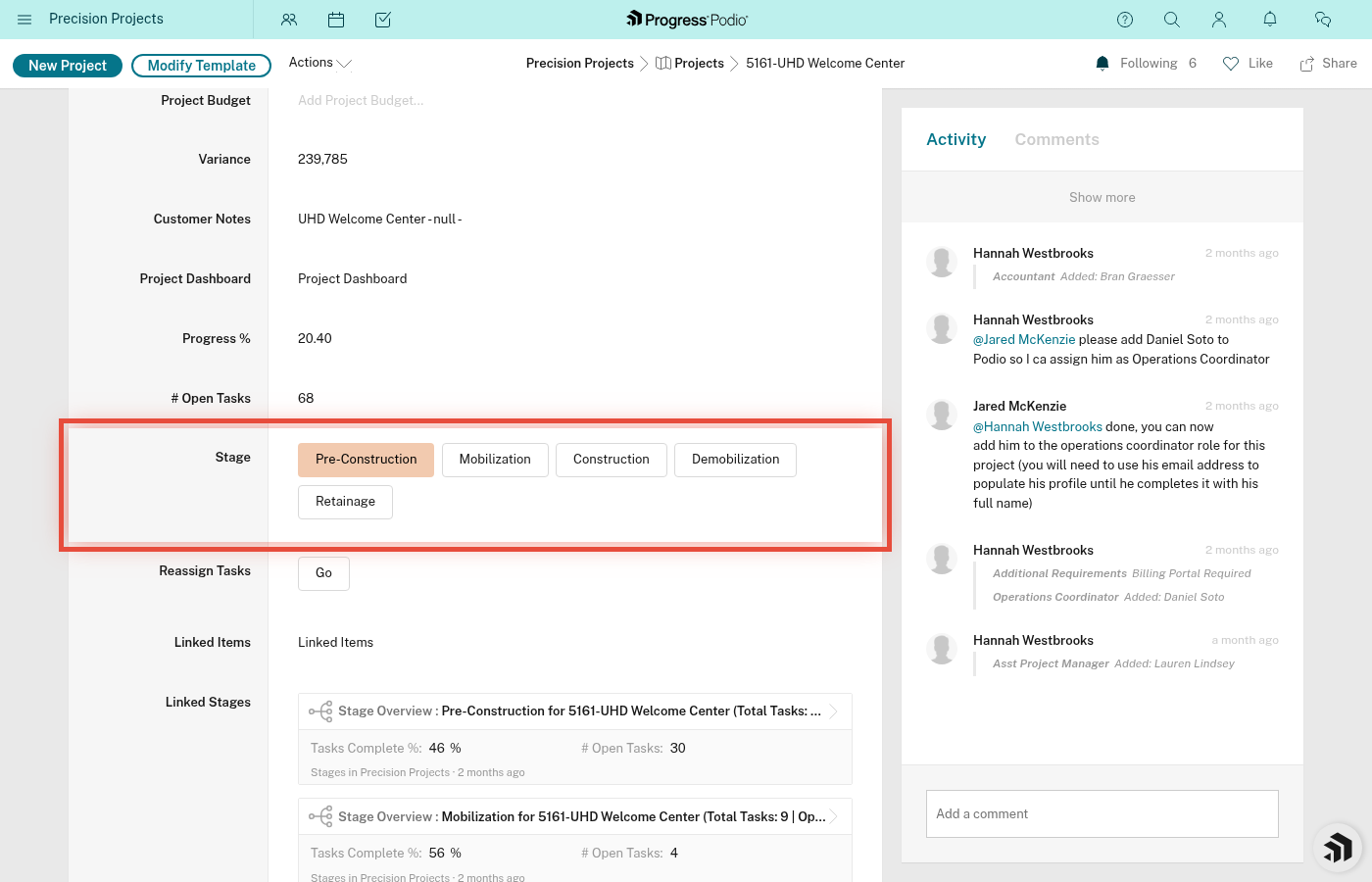
Mobilization starts when you advance from Pre-Construction.
When Pre-Con is done (or close to done), you change Current Stage Status to "Mobilization Active".
Within 2-3 minutes, Podio creates tasks for Mobilization.
How Many Tasks in Mobilization?
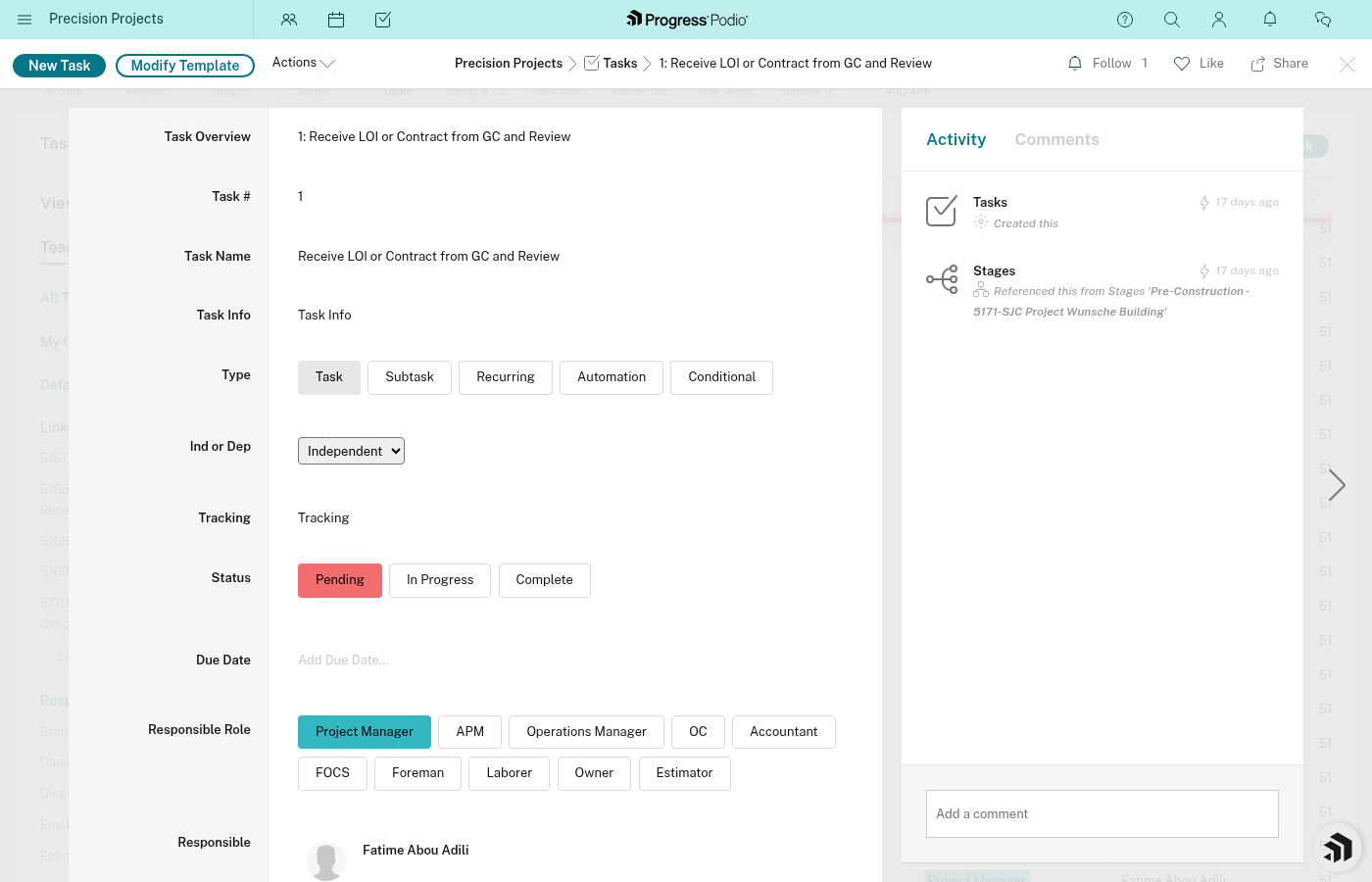
For Concrete division: 9 tasks.
Mobilization typically has fewer tasks than Pre-Con because it's more straightforward — it's mostly execution (set up X, deliver Y, brief Z).
Major Categories of Mobilization Work
1. Site Setup
Get the physical job site ready.
Tasks may include:
- Install temporary fencing (if required)
- Set up job trailers or office space (if applicable)
- Set up temporary utilities (power, water, sanitation)
- Mark boundaries and work zones
- Set up safety barriers and signage
- Establish material staging areas
Why it matters: A well-organized site is safer and more efficient.
Site setup task examples - tasks related to site setup in Mobilization
2. Equipment Delivery
Get the tools and machines on-site.
Tasks may include:
- Deliver concrete trucks (if needed for this job)
- Deliver excavators, backhoes, etc. (if applicable)
- Deliver hand tools and small equipment
- Inspect equipment condition upon delivery
- Ensure equipment is fueled and ready
Why it matters: Can't work without tools. Get them on-site early so you're not waiting on delivery day-of.
3. Crew Assignment & Briefing
Make sure the right people are assigned and they know the plan.
Tasks may include:
- Assign crew members to the job
- Conduct pre-job crew briefing (scope, schedule, safety, logistics)
- Distribute site access info (gate codes, parking, contact numbers)
- Review drawings and plans with foreman and crew
- Confirm crew understands roles and responsibilities
Why it matters: The crew can't execute what they don't understand. Brief them thoroughly.
Crew briefing checklist task - specific task example for crew briefing
4. Final Safety Checks
Before work starts, double-check safety.
Tasks may include:
- Verify SSSP is on-site and crew has reviewed it
- Conduct toolbox talk / safety meeting
- Inspect PPE (hard hats, vests, boots, gloves, etc.)
- Verify first aid kit is on-site
- Confirm emergency contacts are posted
- Review site-specific hazards with crew
Why it matters: Last chance to catch safety issues before work begins.
5. Material Staging
Get materials delivered and organized.
Tasks may include:
- Coordinate material delivery (rebar, concrete, forms, etc.)
- Verify delivery quantities against order
- Stage materials in designated areas (keep pathways clear)
- Protect materials from weather/damage
- Confirm materials match approved submittals
Why it matters: Having materials on-site (and in the right spot) prevents delays on day 1 of construction.
6. Access & Logistics Confirmation
Make sure everyone can get to the site and knows where to go.
Tasks may include:
- Confirm site access (gates, roads, parking)
- Distribute gate codes or access badges
- Identify parking areas for crew and equipment
- Confirm delivery routes for trucks
- Notify neighbors or adjacent properties (if required)
- Confirm work hours and noise restrictions
Why it matters: Don't show up Day 1 and realize the gate code doesn't work or parking is blocked.
7. Final Coordination with GC
Last-minute alignment with the general contractor.
Tasks may include:
- Confirm start date with GC
- Verify site is ready for your work (previous trades finished?)
- Get any final approvals or sign-offs
- Confirm daily check-in process
- Exchange contact info for on-site coordination
Why it matters: GC needs to know when you're starting. Make sure they're ready for you.
Task Dependencies in Mobilization
Some Mobilization tasks depend on Pre-Con tasks being done first.
Example:
- Can't deliver equipment until site access is confirmed (Pre-Con task)
- Can't brief crew until submittals are approved and you know the final plan (Pre-Con task)
Podio tracks these dependencies automatically.
Mobilization task showing dependency on completed Pre-Con task - Mob task with Dependencies field pointing to completed Pre-Con task
Mobilization Timeline
How long does Mobilization take?
Typical duration: 1-3 days
Factors that speed it up:
- Small job site (just park and unload)
- Minimal equipment needed
- Small crew
- No site setup required (existing infrastructure)
Factors that slow it down:
- Large job site requiring extensive setup (fencing, trailers, utilities)
- Complex logistics (restricted access, narrow roads, coordination with other trades)
- Weather delays (can't set up in heavy rain/snow)
- Equipment delivery delays
Most jobs: Mobilization happens quickly once Pre-Con is done. It's mostly physical execution, not waiting on approvals.
How to Know When Mobilization Is Done
Mobilization is "done" when:
✅ Site is physically set up (fencing, trailers, barriers, signage in place)
✅ Equipment is on-site and operational
✅ Crew is assigned and briefed
✅ Materials are staged and ready
✅ Safety checks are complete
✅ Access and logistics are confirmed
✅ GC is notified and aligned
✅ You're ready to start actual construction work tomorrow
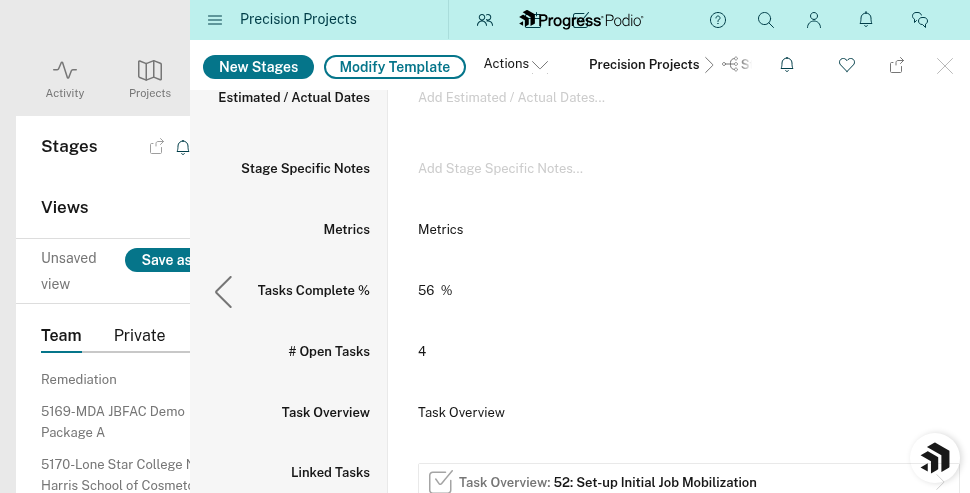
Check your tasks: If all Mobilization tasks are Complete (or nearly complete), you're ready to advance to Construction.
Common Mobilization Mistakes
❌ Starting Construction Before Mobilization Is Done
Problem: Crew shows up Day 1 and equipment isn't there, or materials aren't staged, or safety checks weren't done.
Result: Wasted day, frustrated crew, potential safety issues.
Fix: Don't advance to Construction until Mobilization is actually complete.
❌ No Crew Briefing
Problem: Crew shows up and nobody explained the plan.
Result: Confusion, mistakes, rework.
Fix: Always brief the crew before work starts. 30-minute briefing saves hours of confusion.
❌ Forgetting Access Details
Problem: Crew arrives at the gate and doesn't have the code, or parking is full and nobody told them where to park.
Result: Delayed start, frustrated crew.
Fix: Distribute access info (gate codes, parking, contacts) BEFORE Day 1.
❌ Equipment Not Ready
Problem: Equipment is delivered but not fueled, or it's broken and nobody checked.
Result: Can't start work.
Fix: Inspect equipment upon delivery. Make sure it's ready to go.
❌ Materials Delivered to Wrong Location
Problem: Rebar shows up but it's blocking the entrance, or it's in the rain and rusting.
Result: Wasted time moving materials, or damaged materials.
Fix: Plan material staging areas ahead of time. Mark them on a site plan and share with delivery drivers.
Tips for Smooth Mobilization
1. Do a Site Walk
Before Mobilization starts, the foreman and PM should walk the site together.
Check:
- Where will equipment go?
- Where will materials be staged?
- Where's the crew parking?
- Are there any surprises (muddy areas, obstructions, etc.)?
2. Use the Auto-Created Mobilization Checklist
Podio automatically creates a Mobilization checklist for you when the Mobilization stage activates — you don't need to make one manually. The auto-generated tasks cover the standard items:
- Fencing installed
- Equipment delivered
- Crew briefed
- Materials staged
- Safety meeting held
- Access confirmed
- GC notified
Work through them by marking each task Complete as you finish it.
3. Communicate with the Crew
Send a message or hold a quick meeting:
"We're mobilizing Tuesday. Here's the plan:
- Meet at the shop at 7 AM
- Drive to site together (123 Main St)
- Gate code is 4567
- Park in the south lot
- We'll do a safety briefing on-site at 7:30
- Then we start setting up equipment
- Questions?"
Clear communication = smooth start.
4. Verify Equipment Before Delivery
Don't assume the equipment rental company sent the right stuff.
Check:
- Is it the right equipment?
- Is it in good condition?
- Is it fueled?
- Are attachments included?
If something's wrong, deal with it now — not when the crew needs it.
5. Have a Backup Plan
What if:
- Equipment delivery is delayed? (Can you start with hand tools?)
- Weather is bad? (Can you do site setup another day?)
- Materials don't show up? (Can you work on something else?)
Don't let one hiccup derail the whole Mobilization.
6. Don't Rush
Mobilization is usually quick (1-3 days), but don't skip steps.
Example:
Don't skip the crew briefing to save 30 minutes. That 30 minutes prevents hours of confusion later.
Mobilization Checklist
Before advancing to Construction, verify:
- Site is set up (fencing, barriers, signage, staging areas)
- Equipment delivered and operational
- Crew assigned and briefed
- Safety meeting/toolbox talk completed
- PPE verified for all crew members
- Materials delivered and staged
- Access confirmed (gate codes, parking, delivery routes)
- GC notified of start date
- Site plan reviewed with crew
- Emergency contacts posted
- SSSP on-site and available
- All Mobilization tasks Complete or blocking items documented
What Happens After Mobilization?
Once Mobilization is done, you advance to Construction — the actual work begins.
Related Docs:
Remember
Mobilization is the launchpad.
A smooth Mobilization sets the tone for the entire Construction phase.
Take the time to set up properly:
- Organize the site
- Brief the crew
- Check safety
- Stage materials
- Make sure everyone knows the plan
A great Mobilization = a great start to Construction.